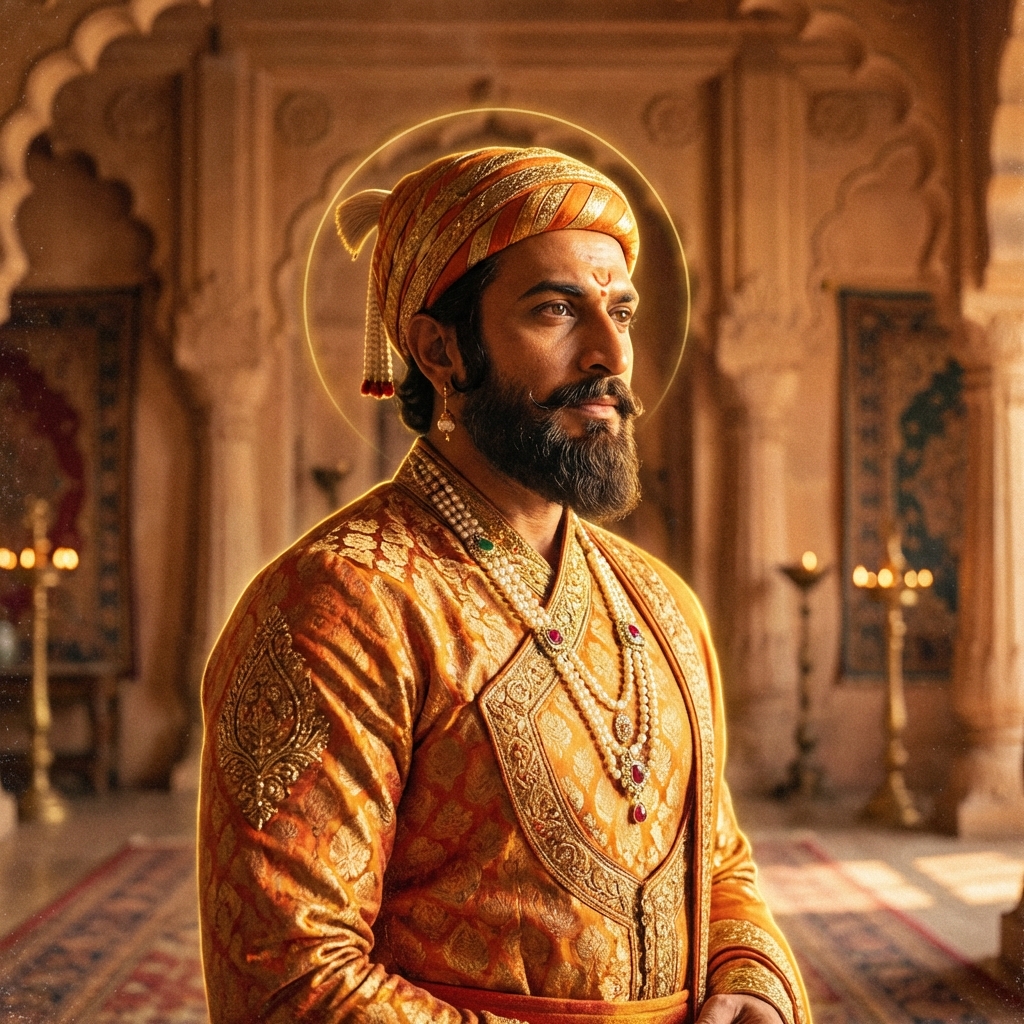
The People's King • Founder of Swarajya
Chhatrapati
Shivaji Maharaj
Celebrating Shiv Jayanti - Feb 19
Pause Cinematic Journey?
The People's King • Founder of Swarajya
— The Eternal Legacy —
At the age of 16, a vision was born. A vow was taken to establish Hindavi Swarajya.
1645 • RaireshwarBorn at Shivneri Fort. Guided by the visionary Rajmata Jijabai to be the protector of the people.
At the age of 16, took the oath of Hindavi Swarajya at Raireshwar temple and captured Torna Fort.
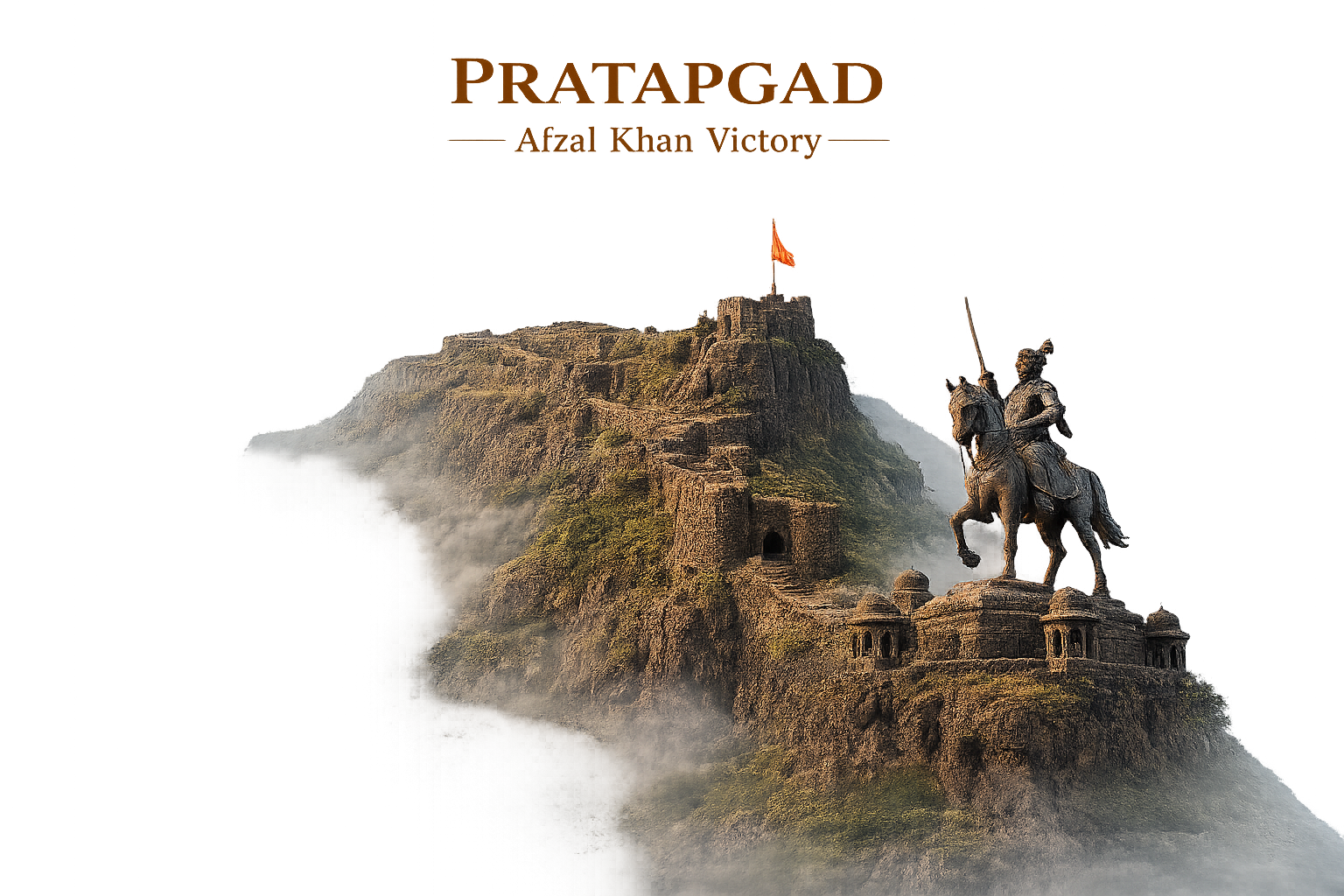
Defeat of Afzal Khan using brilliant strategy and the iconic 'Wagh Nakh', marking a turning point.
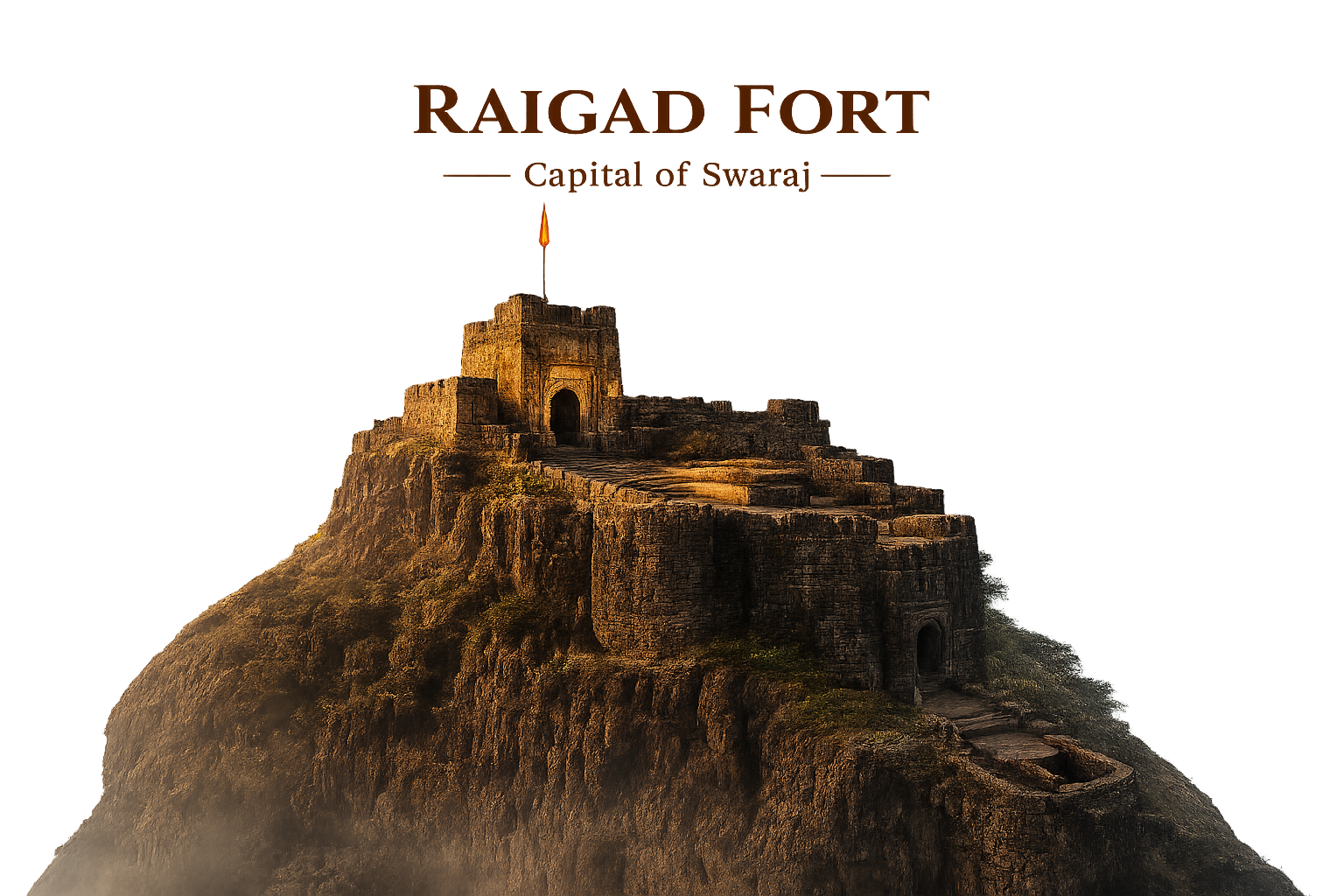
Coronated as 'Chhatrapati' at Raigad Fort, formalizing the sovereign Maratha kingdom.
His principles of justice, women's respect, and naval power continue to inspire millions.
The Coronation at Raigad • 1674
A structured council ensuring balance, accountability, and wisdom in administration.
Revenue systems designed to protect farmers, traders, and common citizens from exploitation.
All faiths respected, protected, and allowed to flourish without fear under Swarajya.
Chhatrapati Shivaji Maharaj (1630–1680) established a sovereign Maratha state in western India through strategic fortification, disciplined administration, and adaptive warfare. His governance emphasized civil protection, decentralized authority, and military intelligence.
Established independent self-rule against formidable empires.
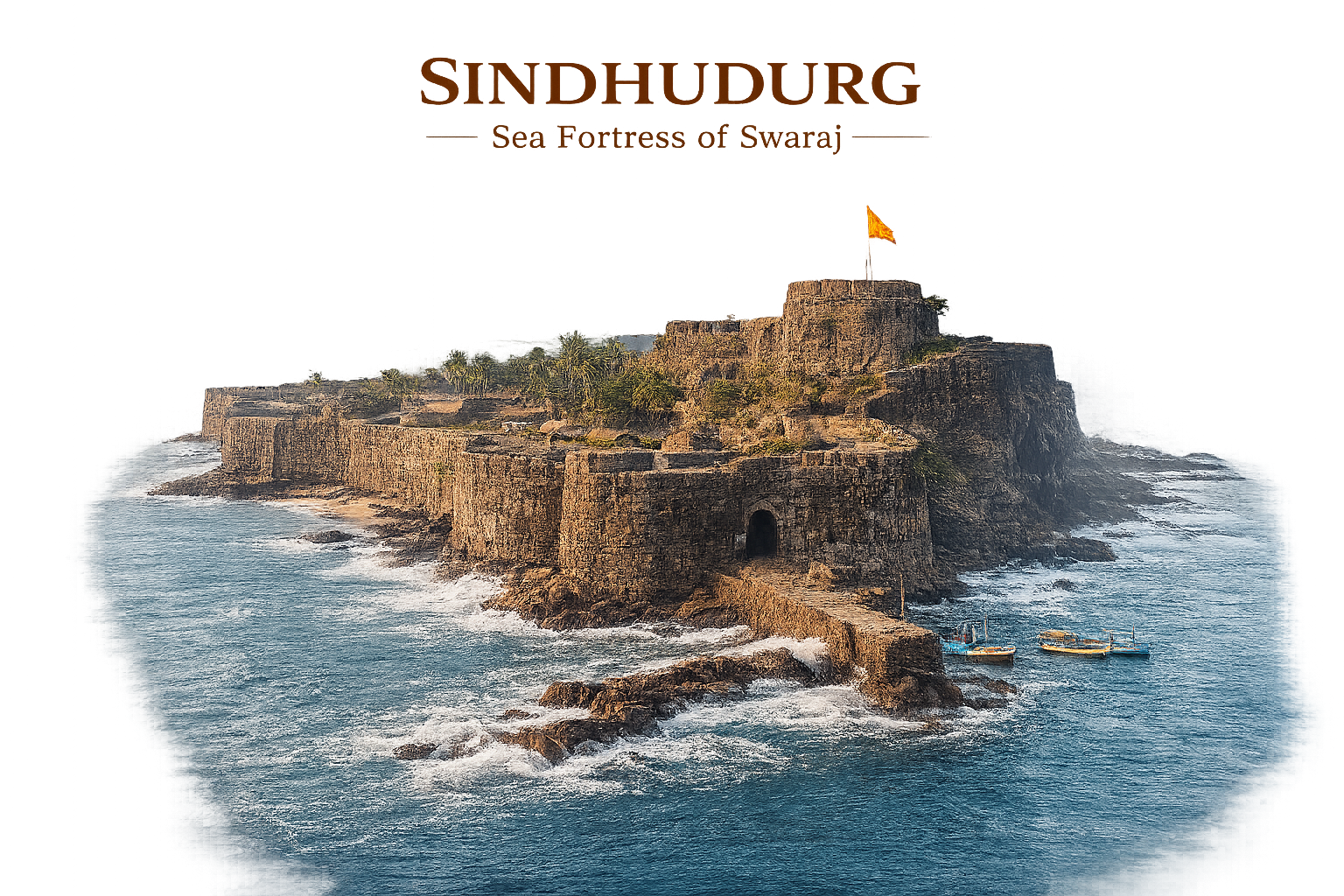
Built and renovated over 300+ forts as strategic defense pillars.
Created the Ashta Pradhan Council for structured governance.
Enforced strict protection for women and common citizens during war.
Marathas were master negotiators. They understood that political recognition and trade routes were as important as battlefields.
Institutionalized revenue via Chauth (25%) and Sardeshmukhi (10%), providing political recognition and protection.
The Maratha military doctrine emphasized mobility, terrain advantage, and intelligence networks rather than conventional heavy formations.
Hit-and-run tactics, night attacks, and terrain-based advantages.
Hill forts like Raigad and Pratapgad provided natural multi-layer defense.
Extensive network of local spies and rapid communication systems.
Fast-moving cavalry that outpaced heavy infantry-based armies.
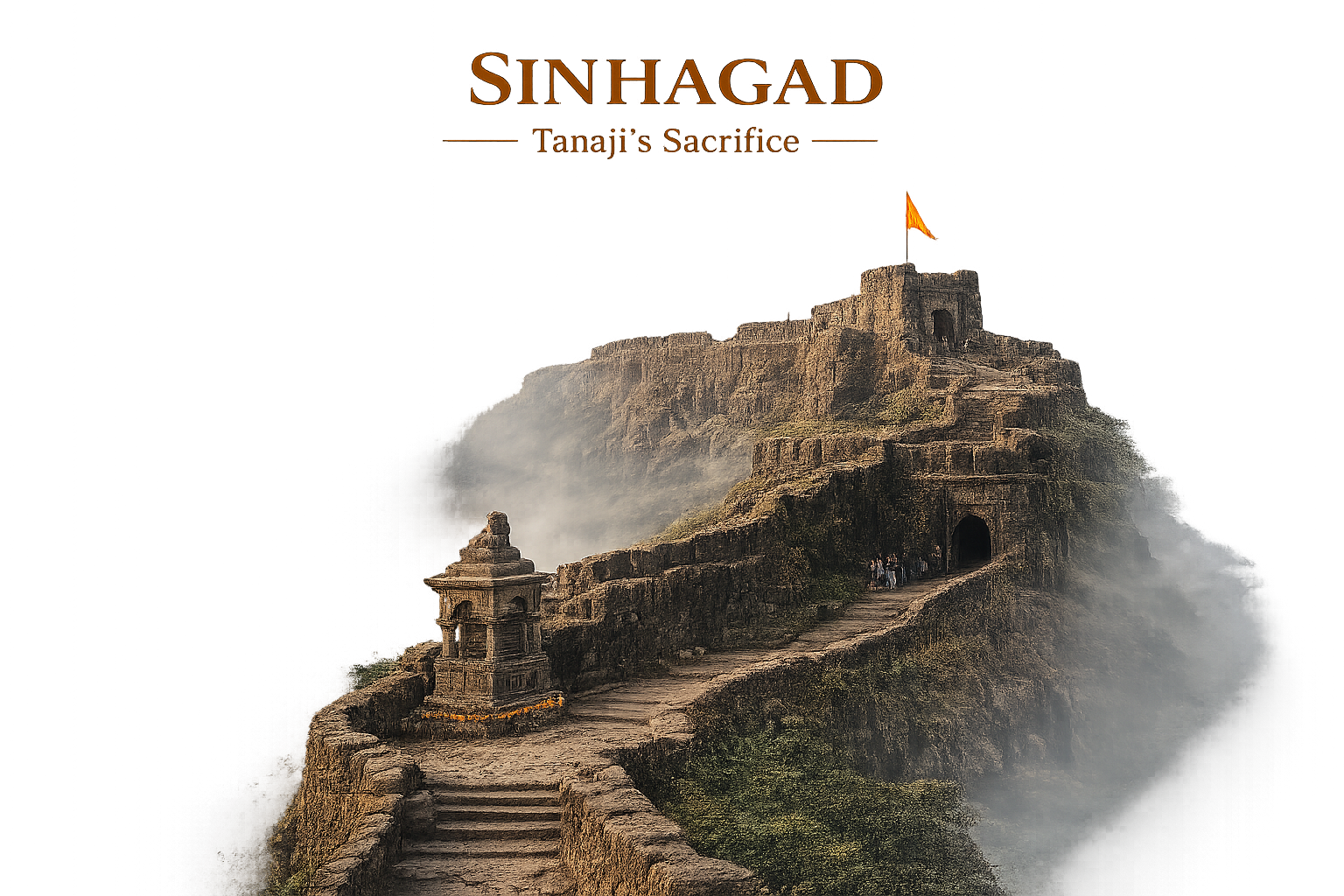
Led the Battle of Sinhagad (1670). A close associate of Shivaji Maharaj and a legendary figure in Maratha history, known for his unmatched bravery and sacrifice.
Siege of Purandar
Battle of Sinhagad (Martyrdom)
The legendary defender of Pavan Khind, who fought until his last breath to ensure the safe escape of Shivaji Maharaj from Panhala Fort.
Battle of Pavan Khind
The Chief Commander (Senapati) who established the dominance of the Maratha cavalry and served faithfully during Maharaj's coronation and beyond.
Coronation Defense
Battle of Wai
The terror of the Mughal armies, known for his lightning-fast cavalry raids and defeating several Mughal generals during the 27-year war.
Mughal War Offensive
A master of guerrilla warfare who, alongside Santaji, kept the dream of Swarajya alive during the most challenging years of the Maratha-Mughal conflict.
Defense of Swarajya
The Sarkhel (Admiral) of the Maratha Navy, who made the Maratha fleet a formidable force and successfully defended the coast against European colonial powers.
Appointed Sarkhel
Naval Dominance
One of the greatest generals in world history, who expanded the Maratha Empire across India and never lost a single battle in his career.
Appointed Peshwa
Expansion Northwards
The younger brother of Peshwa Baji Rao I, famous for his historic victory over the Portuguese at the Battle of Vasai, liberating the western coast.
Siege of Vasai
One of the earliest cavalry commanders of Shivaji Maharaj. Led raids into Mughal territories and temporarily converted under Mughal pressure, later returning to the Maratha fold.
First Sarnobat
Personal bodyguard and elite swordsman of Shivaji Maharaj. Known for unmatched loyalty and battlefield presence during critical campaigns.
Swarajya Service
Hero of the defense of Purandar Fort. Fought bravely against Diler Khan’s Mughal forces and became a symbol of sacrifice.
Siege of Purandar
Close advisor and companion of Sambhaji Maharaj. A warrior-poet who stood with the Chhatrapati till martyrdom.
Royal Service
Led the daring infiltration and capture of Panhala Fort. Known for strategic deception and silent operations.
Agra Escape Aid
Capture of Panhala
Maratha commander instrumental in sustaining resistance against Mughal expansion during the prolonged war period.
Berar Campaigns
Administrative mastermind who preserved Swarajya’s governance structure during crisis after Shivaji Maharaj’s death. Author of the political treatise ‘Adnyapatra’.
Regency Council
One of the early naval commanders who helped establish the Maratha maritime defense system along the Konkan coast.
Naval Establishment
Khanderi-Underi Defense
Served as a naval commander under Shivaji Maharaj, associated with early naval structuring during coastal consolidation.
Mughal Naval Battles
Queen-regent who led the Maratha resistance after Sambhaji Maharaj. Strategically outmaneuvered Mughal forces and kept Swarajya alive.
Regency
Played a significant role in northern expeditions during the mid-18th century expansion phase of the Maratha Confederacy.
Northern Campaigns
Capture of Lahore
Strategically ceded 23 forts to consolidate power for future moves.
Legendary escape from Mughal custody, outsmarting Aurangzeb's intelligence.
Declared 'Chhatrapati', establishing a formal sovereign Hindu kingdom.
The southern expedition secured Jinji and extended Maratha influence into Karnataka and Tamil regions.
Sambhaji Maharaj's diplomatic defiance against the descending Mughal Emperor.



Courage • Justice • Respect • Swarajya
Musical Legacy by V19 Studios
Available on All Major Streaming Platforms
| Website developed & maintained by Mayank Kulkarni |